Classic Cheesecake with Full-Fat Cream Cheese and Buttery Graham Cracker Crust
By Victor Lang
Servings
4
Level
Easy
Choose full-fat block cream cheese, not whipped tubs or spreads, for this classic cheesecake’s stable, smooth filling. Set it at room temperature with the other dairy, then pair the tangy, ultra-creamy cheesecake with its buttery graham cracker crust.
The crust uses graham cracker crumbs, a touch of granulated sugar, and melted butter; pre-baking keeps it sturdy beneath the filling. For the batter, cream cheese is beaten smooth before sugar, while full-fat sour cream and a full tablespoon of vanilla supply tang and flavor. Eggs go in last, one at a time, at low speed to limit added air.
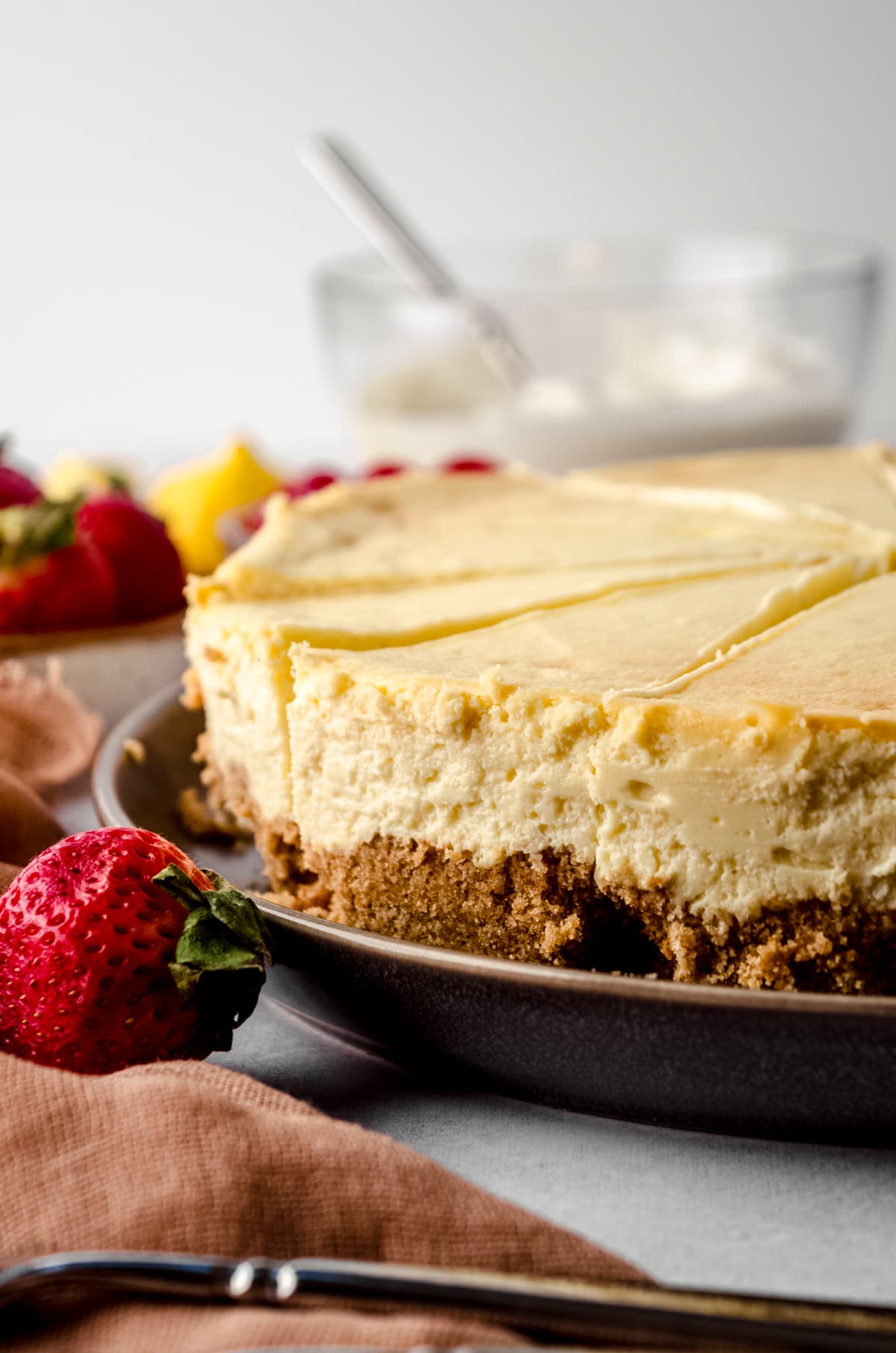
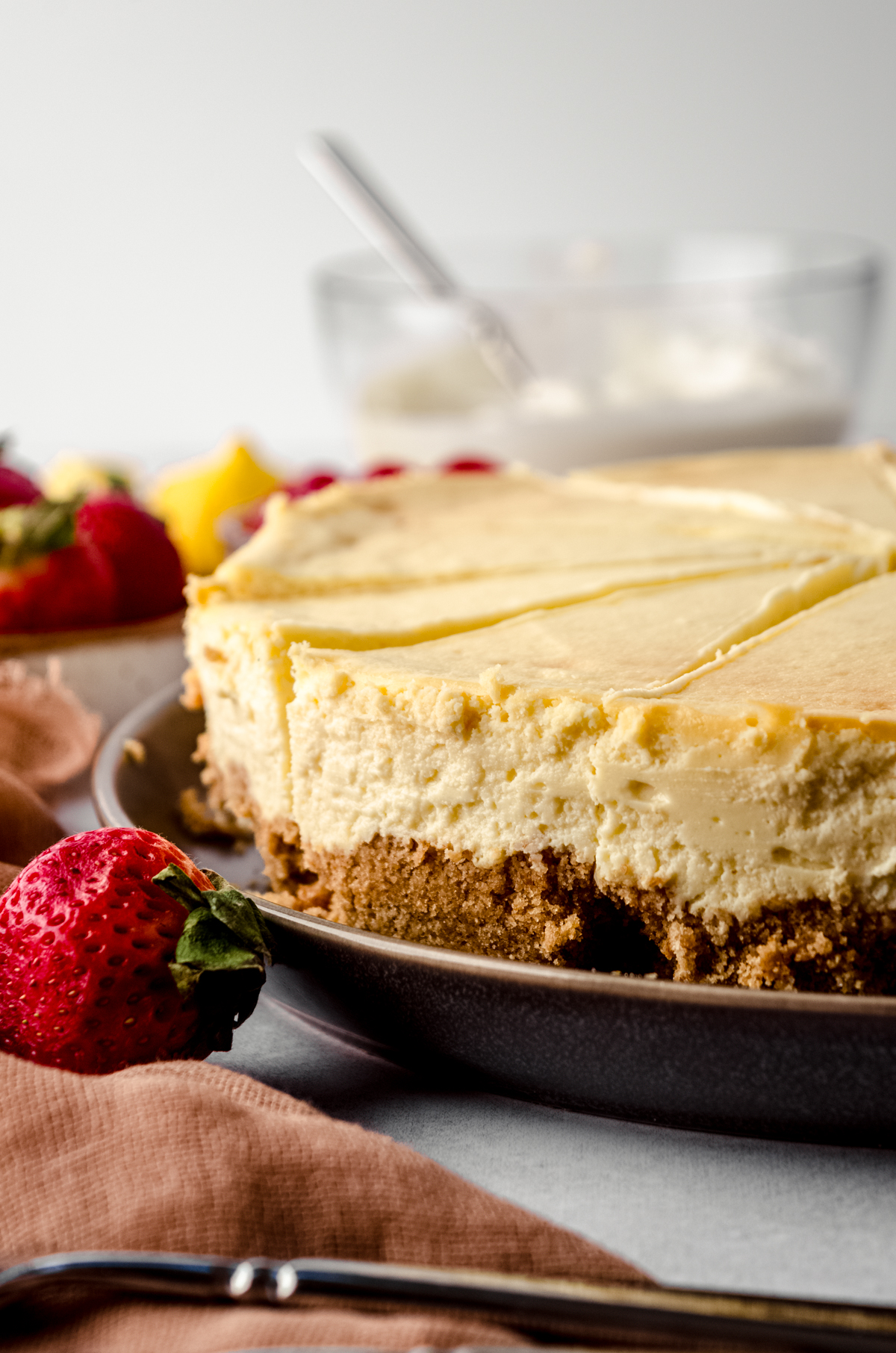
The batter should look smooth and creamy, with only small lumps acceptable, before it enters the pan. During baking, the edges should be set while a roughly 2-inch center still jiggles; 145°F is the stated internal marker. The usual problem is overmixing after the eggs, which adds air and can lead to cracks or deflation. A humid water bath supports even baking.
Cool the cheesecake gradually in the turned-off oven before letting it reach room temperature. Chill it for at least four hours, ideally overnight, then blot any surface condensation before serving. Run a small spatula or butter knife around the rim to release the pan.
Why you'll love this recipe
- Full-fat block cream cheese provides the recipe’s essential structure, while its higher richness supports a smooth filling sturdy enough for toppings without relying on heavy cream.
- A full cup of sugar is deliberately restrained, letting the cream cheese tang remain clear rather than masking the simple filling beneath sweet toppings.
- Full-fat sour cream replaces added heavy cream and extra yolks, contributing the lighter mouthfeel described in the source while keeping the filling rich and stable.
- One tablespoon of vanilla has a clear job here: it flavors a filling with few components, so each slice tastes like classic cheesecake rather than plain dairy.
- Graham cracker crumbs, a little sugar, and melted butter make a slightly crunchy base that holds the filling without becoming soggy after baking.
- Room-temperature dairy and eggs are worth planning for because they blend smoothly at low speed, reducing the need to overbeat the batter into an airy mixture.
Ingredients
- •graham cracker crumbs
- •granulated sugar (for the crust)
- •melted butter
- •2 lb full-fat block cream cheese (room temperature)
- •1 cup granulated sugar (for the filling)
- •full-fat sour cream (room temperature)
- •1 Tbsp vanilla extract
- •eggs (room temperature)
- •hot water (for the water bath)
Instructions
- 1
Make the graham cracker crust and pre-bake it until sturdy.
- 2
While the crust bakes and cools, beat the cream cheese on medium-high speed until smooth, about 2 minutes.
- 3
Add the granulated sugar and beat until combined, about 2 minutes.
- 4
Reduce the mixer to low speed, then add the sour cream and vanilla and mix until completely combined.
- 5
Add the eggs one at a time, mixing on low after each addition and adding the next egg just as the previous egg begins to incorporate, until no yellow yolk streaks remain.
- 6
Use a large spatula to carefully fold the batter, scraping the bottom and sides of the bowl to incorporate any remaining batter.
- 7
Pour the smooth, creamy batter into the prepared pan.
- 8
Place the 9-inch springform pan inside a slightly larger round pan, then place that pan inside an even larger round pan or roasting pan.
- 9
Fill the outer pan with hot water halfway up the sides of the middle pan, then carefully transfer the setup to the oven.
- 10
Bake until the edges are set and only about a 2-inch center remains slightly jiggly, or until the internal temperature reaches 145°F (63°C).
- 11
Turn off the oven, crack the door, and let the cheesecake cool in the oven for 1 hour.
- 12
Let the cheesecake continue cooling on the counter until it reaches room temperature.
- 13
Cover and chill for at least 4 hours, ideally overnight; blot any condensation from the surface with a paper towel.
- 14
Run a small spatula or butter knife around the inside edge of the springform pan to release the outer ring.
- 15
If removing the cheesecake from the platform, run a spatula or knife underneath it and use two large spatulas to lift it onto a serving plate.
FAQ
Reviews
Pin this recipe
Tap an image to save it to Pinterest.